
Living well with HIV: Understanding and Addressing Vulnerability
Despite the progress the last 30 years have brought to HIV treatment and care, inequalities and stigma continue to persist. People living with HIV still experience delays or are prevented to access to essential services, disruptions in continuity of care, and limited access to integrated support for comorbidities. While differences in geography and socio-economic status create physical barriers to care, accessing equitable, high-quality support is also impacted by discrimination, stigma and misinformation.
The impact of these barriers is immeasurable for people living with HIV, a condition which requires careful and sustained management due to the high prevalence of comorbidities. Such barriers are compounded by a web of tangible and intangible factors, revealing situations of vulnerability. Vulnerabilities can arise from the environments in which people live, including geographical barriers to accessing healthcare and support services, as well as socio-economic inequalities such as poverty, lack of access to education or social protection. Racism, homophobia, transphobia and ageism further exacerbate the vulnerability of people living with HIV. As part of HIV Outcomes’ mission to ensure people living with HIV can live well, recognising and tackling vulnerabilities is essential.
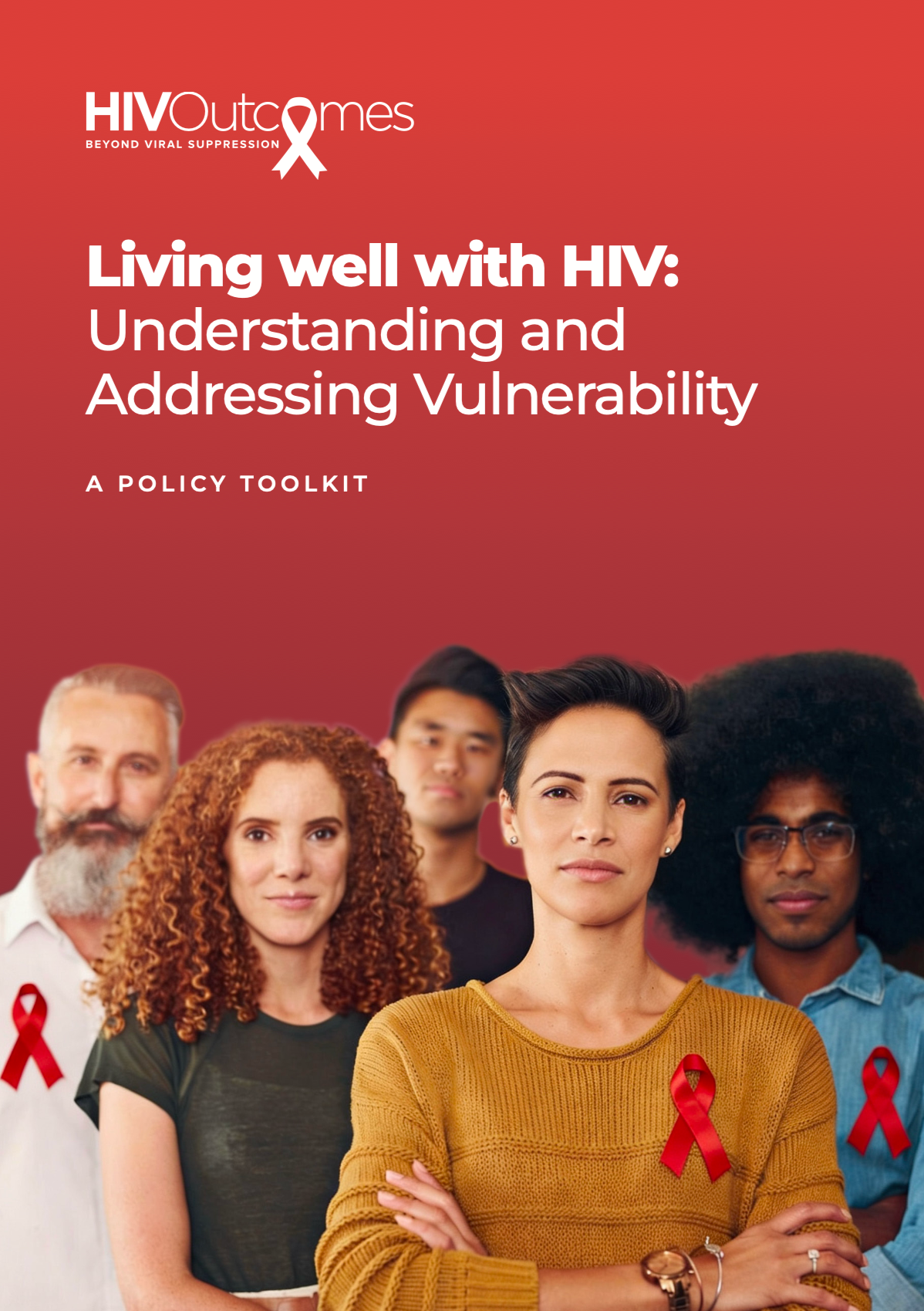
To that end, HIV Outcomes’ policy toolkit Living well with HIV: Understanding and Addressing Vulnerability, supports policymakers, healthcare professionals and communities in recognising and addressing the systemic barriers that prevent people living with HIV from accessing the care and support they need.
What is vulnerability?
Vulnerability is not an inherent characteristic of individuals or communities. People are not vulnerable because of who they are; rather, they are placed in situations of vulnerability which are created when health systems and social support networks fail to meet people’s needs or place additional barriers to accessing care. This distinction between vulnerability and situations of vulnerability matters because it shifts responsibility to adapt and change away from individuals and towards the systems, policies and structures that shape people’s ability to access care.
What does this mean for a person living with HIV?
FFor people living with HIV, living well means more than viral suppression. It includes good physical, mental, social and sexual health, as well as access to respectful, stigma-free and non-discriminatory care. However, many people continue to face barriers that limit access to services, disrupt continuity of care or prevent them from receiving support for mental health, comorbidities and broader social needs.
Stigma and discrimination can also undermine the quality of care people receive and limit access to newer, innovative prevention and treatment options, reinforcing existing inequalities in health outcomes.
H
HIV Outcomes’ mission is grounded in equity and fairness. These two principles are essential to incorporate into every stage of HIV care, from clinical care to social support. People living with HIV need healthcare that treats them with dignity and respect, regardless of their sexual orientation, financial status, or socio-economic background. Equitable access begins with ending stigma and discrimination; fairness is built upon community-led support and economically and geographically accessible services. In particular, HIV Outcomes is advocating for healthy ageing with HIV, where healthcare services attend to the needs of older adults with HIV, including frailty and other geriatric syndromes, disability, age-related comorbidities, and mental health conditions like depression.
Reframing vulnerability as a systemic challenge reminds healthcare professionals and policymakers to look beyond individual risk factors and focus on the conditions that make HIV care accessible and effective for everyone. Addressing these conditions is essential to protect progress in HIV, reduce inequalities and ensure that all people living with HIV can live well.
What’s next?
With the Vulnerability Toolkit, HIV Outcomes calls for robust implementation measures on long-term care and social protection, improved data and monitoring, EU-level guidance on anti-discrimination measures and sustainable funding for community organisations.
Looking ahead, HIV Outcomes will continue to update its policy asks to ensure they reflect the persisting, and long-term need to address vulnerabilities. These asks will be updated around World AIDS Day, ensuring the voices of underserved communities are included in the next generation of health policy.
What can you do?
We all have a role to play in reducing situations of vulnerability and ensuring that people living with HIV can access person-centred, responsive care. You can support this by using the Toolkit’s recommendations in your advocacy, policy work and healthcare practice. By aligning your messaging with these asks, you help translate lived experience, evidence and advocacy into concrete political action.
Patient advocates: Start by engaging with people living in vulnerable situations in your community and consider how local health systems and services can better respond to them.
Clinicians: Reflect on how the healthcare systems shape access, experience and outcomes, and identify opportunities to create care environments that recognise and address the wider factors influencing people’s health and wellbeing. Pilot small changes in daily practice, such as integrating PROMs into HIV consultations to understand the effect of vulnerabilities, stigma and discrimination on people living with HIV. Engage your teams and partners to explore how these approaches could be adapted or scaled locally.
Policymakers: Develop national and EU-level guidance and minimum training standards on non-discriminatory and culturally competent care and ensure sustainable and adequate funding and operational grants for community organisations to raise awareness, deliver training and support people living in vulnerable situations to access care.
Only through concrete implementation of these recommendations, alongside shared learning and collaboration between health systems, policymakers, community organisations and people living with HIV, can we advance more person-centred, evidence-based HIV care across Europe.
Help us showcase solutions that address vulnerability in HIV care.
We welcome examples of initiatives that tackle the social, structural and systemic factors that place people living with HIV in situations of vulnerability to feature in our Compendium of Good Practices. Share your experience with us and help inspire action across Europe.
