
Person‑centred healthcare model – the use of PROMs to improve HRQoL
Since its inception, HIV Outcomes has focused on one fundamental question: how do we ensure people living with HIV can truly live well, not just longer?
As the initiative evolved, it became clear that achieving this vision requires more than clinical markers. It requires understanding how individuals perceive their health and well-being.
What are Patient‑Reported Outcome Measures—and why they matter
To improve what matters, you first have to measure what matters: as well as treating HIV, people living with HIV often have to manage living with comorbidities, mental health and stigma-related challenges, which are undervalued or else undetected in routine clinical care.
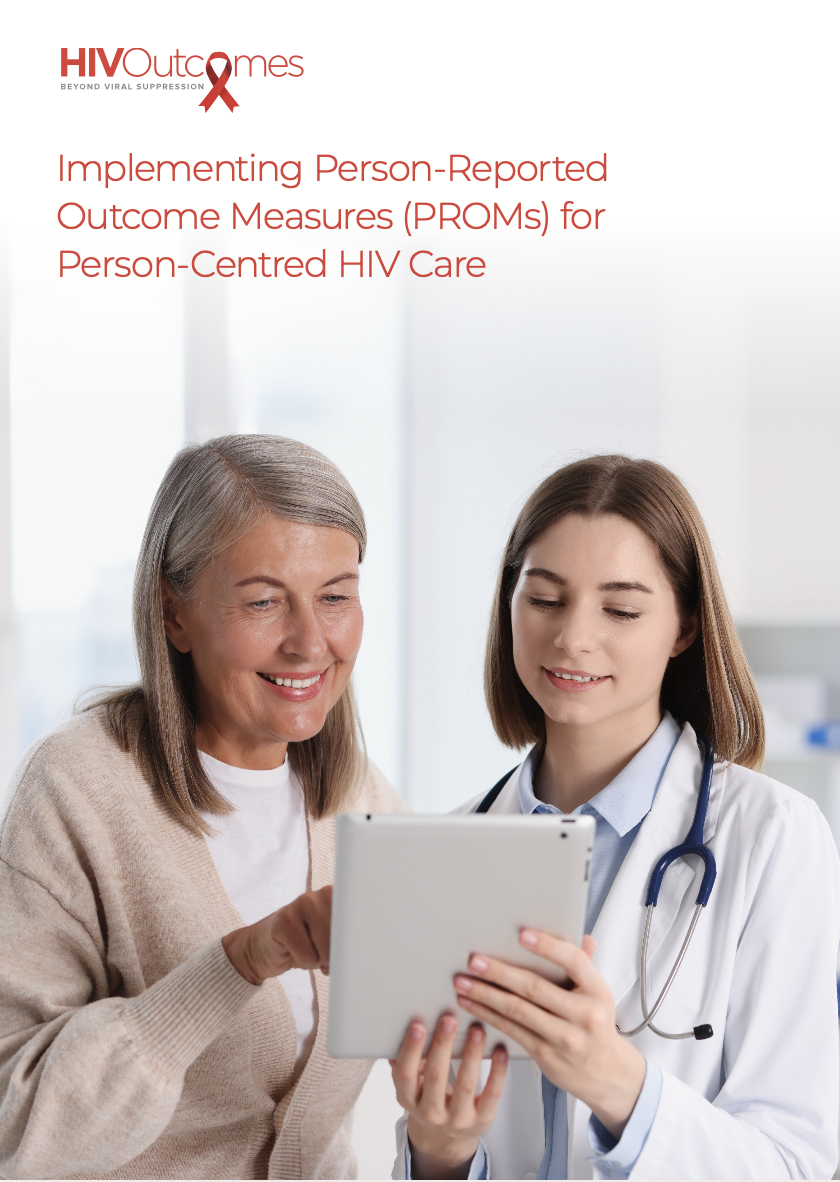
This is where Patient Reported Outcome Measures (PROMs) come in. PROMs are standardised questionnaires designed to capture an individual’s own perspective on their health and well-being, including physical, mental and social dimensions – information that clinical indicators alone cannot provide. PROMs turn lived experience into meaningful, actionable data, making people’s voices a core element of how care is designed, delivered, and evaluated.
PROMs are a powerful resource which, when leveraged intentionally and systematically, can:
Strengthen communication between people living with HIV and their care providers,
Increase awareness of health needs for both individuals and clinicians,
Support shared decision making and empower people to take an active role in their care,
Enable timely identification of concerns that may otherwise go undetected,
Where data is aggregated, help clinics and health systems improve quality of care over time.
By putting patient experience on equal footing with clinical indicators, PROMs embody the heart of HIV Outcomes’ mission: ensuring that care reflects the realities of people living with HIV.
PROMising but not yet PROMinent
Despite their recognised benefits, implementing PROMs requires thoughtful and well-planned integration into clinical practice. When should PROMs be completed? How are results discussed with individuals? What care pathways and systems are needed to ensure meaningful follow-up? These are all essential questions to address before integrating PROMs into clinical practice.
Key concerns remain around administrative and technical burden, resource and staffing constraints, training needs, and the risk of reinforcing existing inequalities if some groups are systematically excluded from completing PROMs, because of system-wide barriers.
Yet across Europe, there is strong willingness from both clinicians and people living with HIV to embed PROMs into routine care. Evidence shows that, when done right, PROMs meaningfully strengthen person‑centred HIV care.
Sweden, our PROM queen
We often cite the Sweden example as a model for PROMs and integrated care. Why? Sweden became the first European country to integrate PROMs into routine HIV clinical check-ups, sending annual questionnaires to people living with HIV to assess their physical, mental and social wellbeing and satisfaction with care. These insights not only form the basis of person-centred care but also provide a unique national database on long-term outcomes and health-related quality of life (HRQoL).
Thanks to PROMs, Sweden has one the most comprehensive pictures of what it means to live with HIV today, enabling research, informing policy, and improving clinical practice.
If more countries followed Sweden’s lead, our collective understanding of how to support long‑term health and well‑being could increase dramatically, with benefits extending far beyond HIV.
What can you do?
Spread the conversation! Are you in touch with national policymakers or experts? Share this paper with them, inform them on the benefits of PROMs, and help make PROMs a reality across Europe.
Do you have an example of good practice related to long-term care or HRQoL for people living with HIV? We are always looking for inspiring initiatives to include in our Compendium of Good Practices.
What’s next?
Our HRQoL Subgroup, co-led by Prof. Caroline Sabin and Dr. Diana Barger, HIV Outcomes has developed two resources to support wider knowledge and implementation of PROMs:
Our PROMs Advocacy Toolkit, which explains what PROMs are, how they benefit people living with HIV and healthcare professionals, what barriers must be addressed, and how PROMs can support more person‑centred and equitable care.
A forthcoming academic article, co-authored by our members, detailing the common concerns surrounding PROMs implementation and how these can be overcome (stay tuned!)