
Joint Community Sector Report
Community is and always has been the frontline of the HIV/AIDS epidemic. For an epidemic characterised by inequalities, stigma and a failure to protect and treat the most vulnerable among us, volunteer organisations have made it possible for care to reach, treat and re-engage with people living with HIV.
Before and beyond viral suppression
The HIV response was never just assisted by community organisations. Our progress owes a great debt to the essential services, mobilisation and tireless advocacy of volunteers who have formed trusted bridges with underserved populations, fought for access to treatment, and continue to provide peer support, mental health and re-engagement services. All these have helped people not just cope with HIV, but to live and thrive.
Charities, NGOs, patient advocacy groups, funded largely by grants and donations with little to no public funding, operate without long-term funding and bank on the willingness and drive of their volunteers.
The range of critical services they offer is staggering: counselling, social and health support, harm reduction, testing, PrEP awareness, training healthcare professionals, stigma and reduction campaigns, treatment advice, community interventions... the list goes on.
Our research, carried out in Italy, Romania and the UK, shows that the community sector doesn’t just advocate for equity, dignity and good health-related quality of life. It delivers it. Across Europe, these organisations go well beyond simply complementing national health systems.
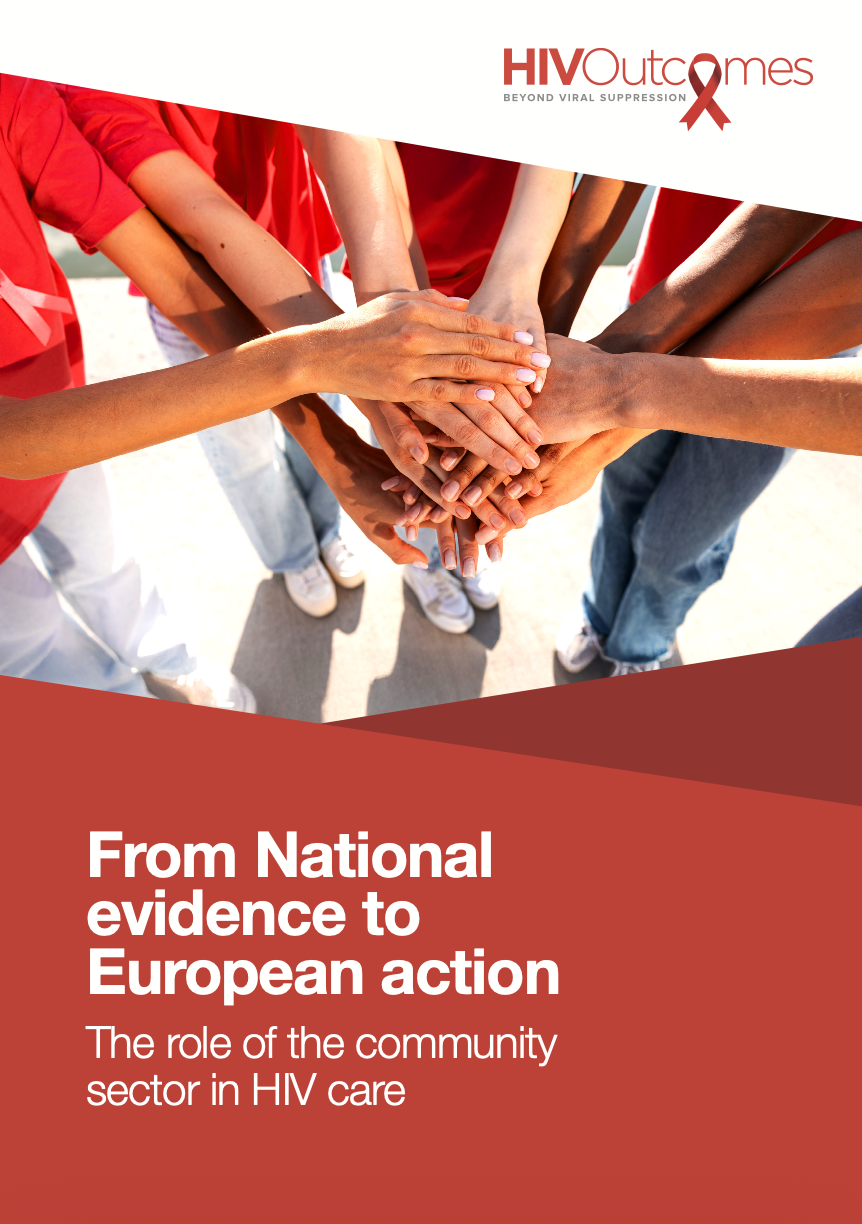
A new report on the role of the community sector
HIV Outcomes is pleased to publish a new report on the HIV community sector, recognising its core importance to the HIV response, in the past and future.
The report consolidates research carried out by our national initiatives in Italy, the UK and Romania, assessing the services community organisations offer, the funding they receive, and their perceived value by both public health services and people living with HIV.
The key takeaway isn’t just that people living with HIV depend on community services. It is that governments and public health services do too.
Undercutting community sectors, weaking the HIV response
The research paints a worrying picture. Since 2025, funding for community sector organisations has come under increasing pressure globally, and across Europe, with tighter public finances and growing demand for services creating an increasingly uncertain funding environment.
If Europe does not act, and provide these organisations with reliable and sustainable long-term funding, our ability to help people living with HIV is greatly diminished.
Our recommendations, detailed at greater length in our new report, address the essential need to sustain services, ensure continuity of care, and improve access for key populations:
▫️Recognise and integrate the community sector as a core partner in the HIV response
▫️Secure sustainable investment community-led HIV services
▫️Reduce stigma and health inequalities through community-led approaches
▫️Improve equity and promote a more extended care access
What's next?
Learn more about the role played and challenges faced by grassroots, community organisations across Europe: HIV Outcomes has specific reports on the role of the community sector in Italy, Romania, England, Scotland, Northern Ireland and Wales.
What can you do?
National and European budgets are the result of policy priorities and decisions. Contact policymakers and bring forward evidence from community sector employees, clinicians and people living with HIV to testify to the importance of these organisations.
Share your initiative and help drive change in HIV care.
We welcome examples of programmes and initiatives that address the factors contributing to vulnerability among people living with HIV. Selected submissions will be featured in our Compendium of Good Practices, helping to promote effective approaches and inspire action across Europe.
